Courtney Kates, Teacher Candidate — York University, ckates@uwaterloo.ca
Tasha Richardson, PhD, OCT, Teacher — TDSB, tasha.richardson@tdsb.on.ca
“It is the day of your unit 4 test when you wake up and realize that your alarm hasn't gone off. You race to school and you see all of your classmates outside of the room looking at a note on the door.”
In less than two years, students in Ontario high schools will all be part of what is collectively known as Generation Alpha. This cohort, born after 2010, is often referred to as “digital natives” who are characterized by high digital literacy, proficiency in touchscreen navigation and app-based play, along with shorter and more rapidly shifting attention spans (Fernando & Premadasa, 2024). For many educators, these characteristics highlight a need to incorporate more student-centered approaches that are visual, multimodal, and hands-on (Fernando & Premadasa, 2024). Using escape rooms with a compelling narrative can sometimes give students the motivation they need to focus on practicing and reviewing the skills they need to work with concepts taught in class.
Game-based learning (GBL) transforms the learning environment into one that requires students to be active participants in their learning (Oar, 2025). Successful games balance their challenges with the player’s skill level to prevent boredom or anxiety during play (Csikszentmihalyi, 1990). They can also provide an authentic context for problem-solving, immediate feedback loops, all while providing a “safe failure” space where students can iterate on strategies without fear of real-world consequences (Oar, 2025).
The educational escape room (EER), is an effective application of GBL, where its “puzzles” follow a consistent challenge–solution–reward cycle, ensuring that student progress remains tangible and motivating as they earn codes for locks or new pieces of information (Janiga & Haverlíková, 2025; von Kotzebue et al., 2022).
When designing an EER, here are a few considerations:
- What are your learning goals?
- How will you draw in your students (storyline)?
- Are there surprising elements (what is the “moment” for your EER)?
- Do you want to use a linear or multilinear scheme (working together; prevent idle time)?
- Are your puzzles unambiguous (consistent internal logic for the game)?
- How will you debrief the puzzle (process emotions, thought processes, internalize knowledge and skills)?
An Escape Room for Sound
As a consolidation activity for the grade 11 Sound Unit, we used a digital educational escape room (DEER). The faulty alarm clock narrative created a sense of urgency for the students, and students easily focused on solving 4 puzzles for the 35 minutes allotted for the escape. Students played in teams of three, and the escape room followed a linear scheme.
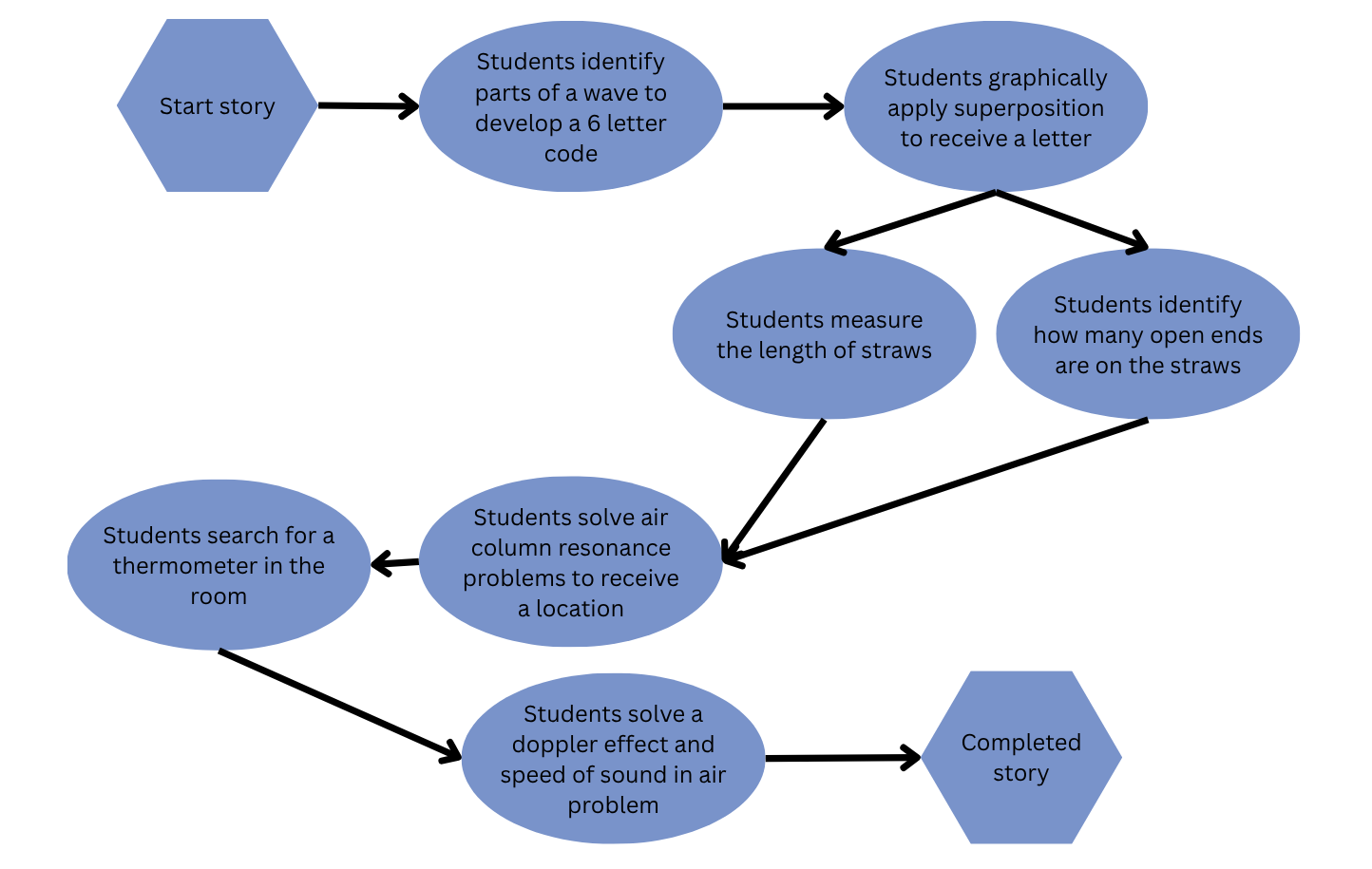 Figure 1: Schematic of linear DEER for Waves and Sound unit in Grade 11 University Preparation Physics.
This scheme was selected intentionally for students to work together solving each puzzle, and they rotated through the roles of scribe, data entry, and hands-on manipulator.
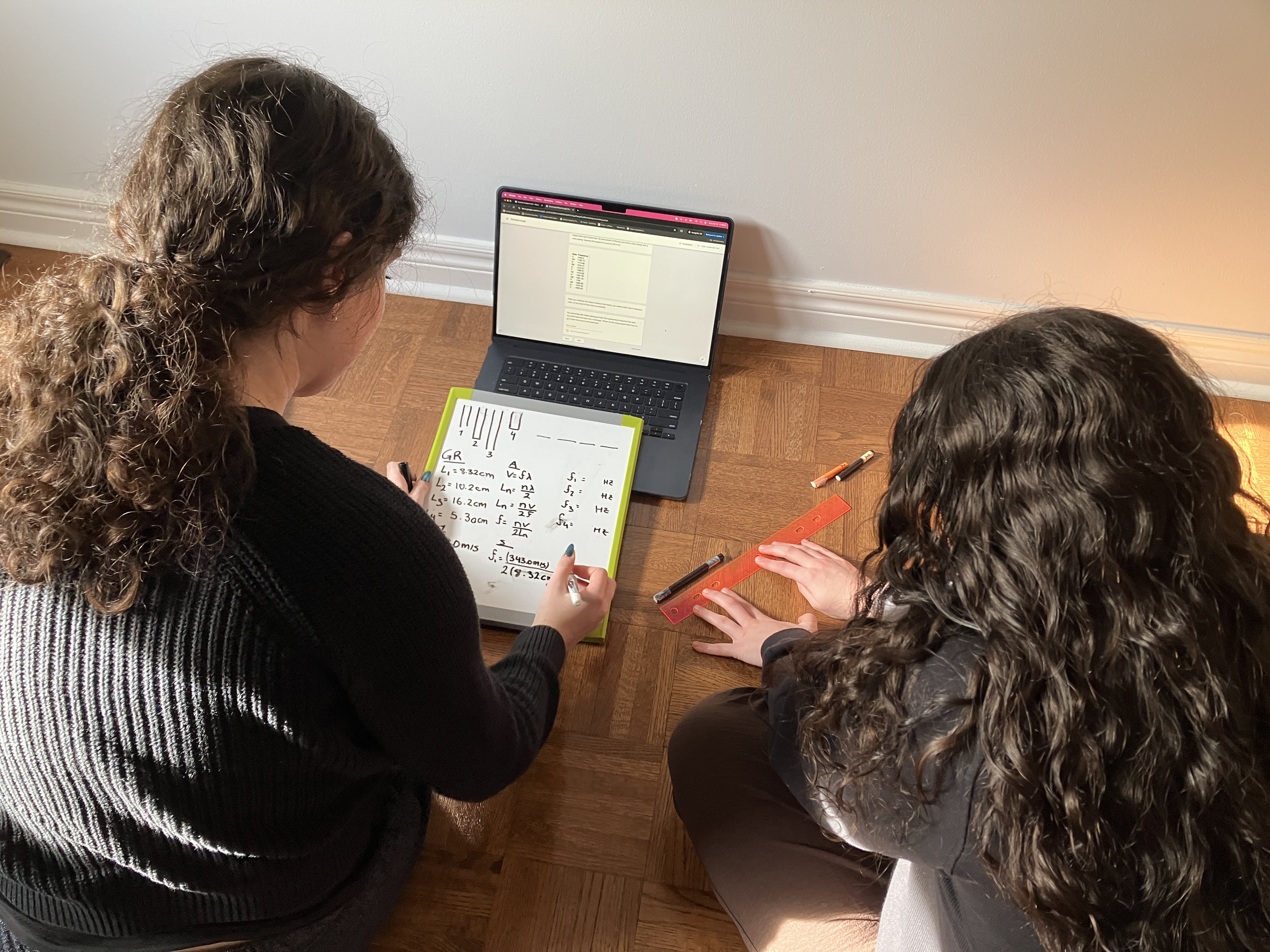 Figure 2: Students collaborating on escape room.
Our digital escape room was housed in Google Forms. If using Google forms (or other) we offer the following considerations:
Question Type: Short Answer or Multiple choice
- Short Answer: Google Forms are able to validate both numeric and text responses, making it well-suited for codes or numeric answers as room solutions. When the goal requires students to practice the same concept multiple times, setting a code proves useful. This can be themed as a lock with a given number of inputs, an alarm to deactivate, or a secret passphrase.
- Multiple Choice: As Google Forms cannot analyze images, framing graphical questions in a multiple choice format can allow for students to demonstrate their knowledge.
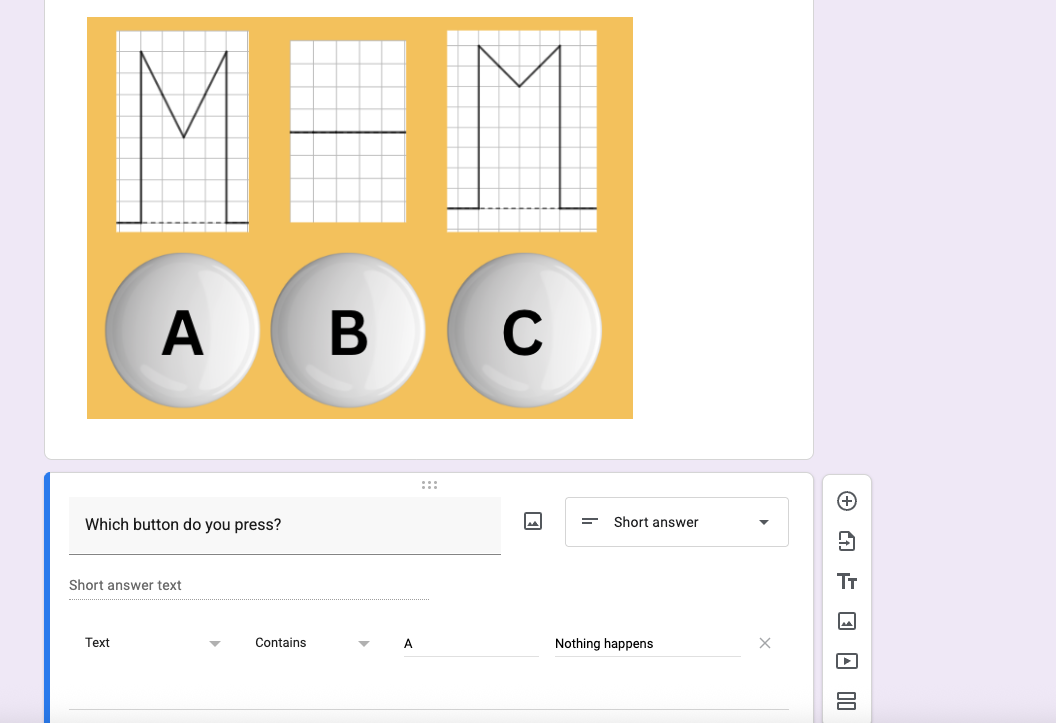 Figure 3: Canva created image shows 3 buttons to press correlating to the letter students enter in the response area.
Response Validation: To allow student groups to progress through tasks at their own pace, question types were selected with “Response Validation”. The response validation is case sensitive; it is helpful to include a note for students as to the format to enter in any text or numbers. For instance, should a code be entered in all capitals or all lowercase.
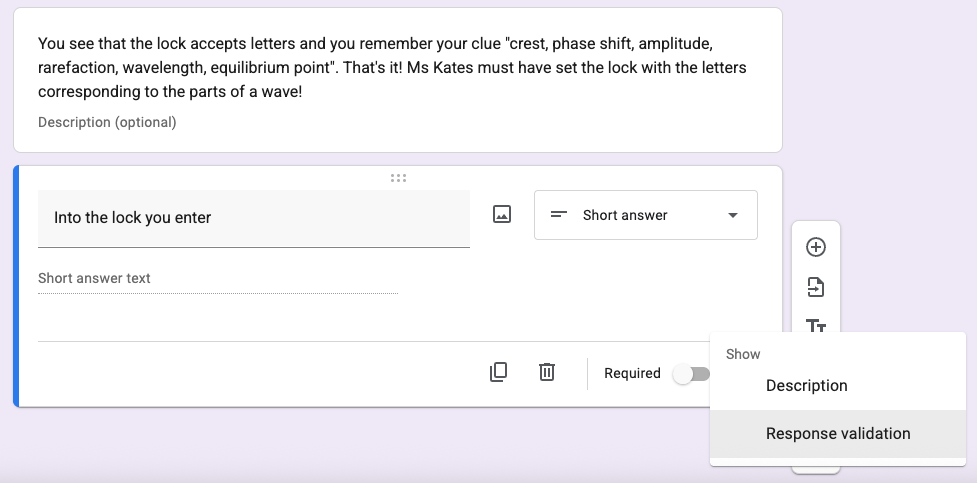 Figure 4: Location of response validation within Google forms.
Response Variation: As responses may have some variation, the question can be set to “Contain”, allowing students to advance even when they do not answer the response verbatim, or are accurate to within a given range.
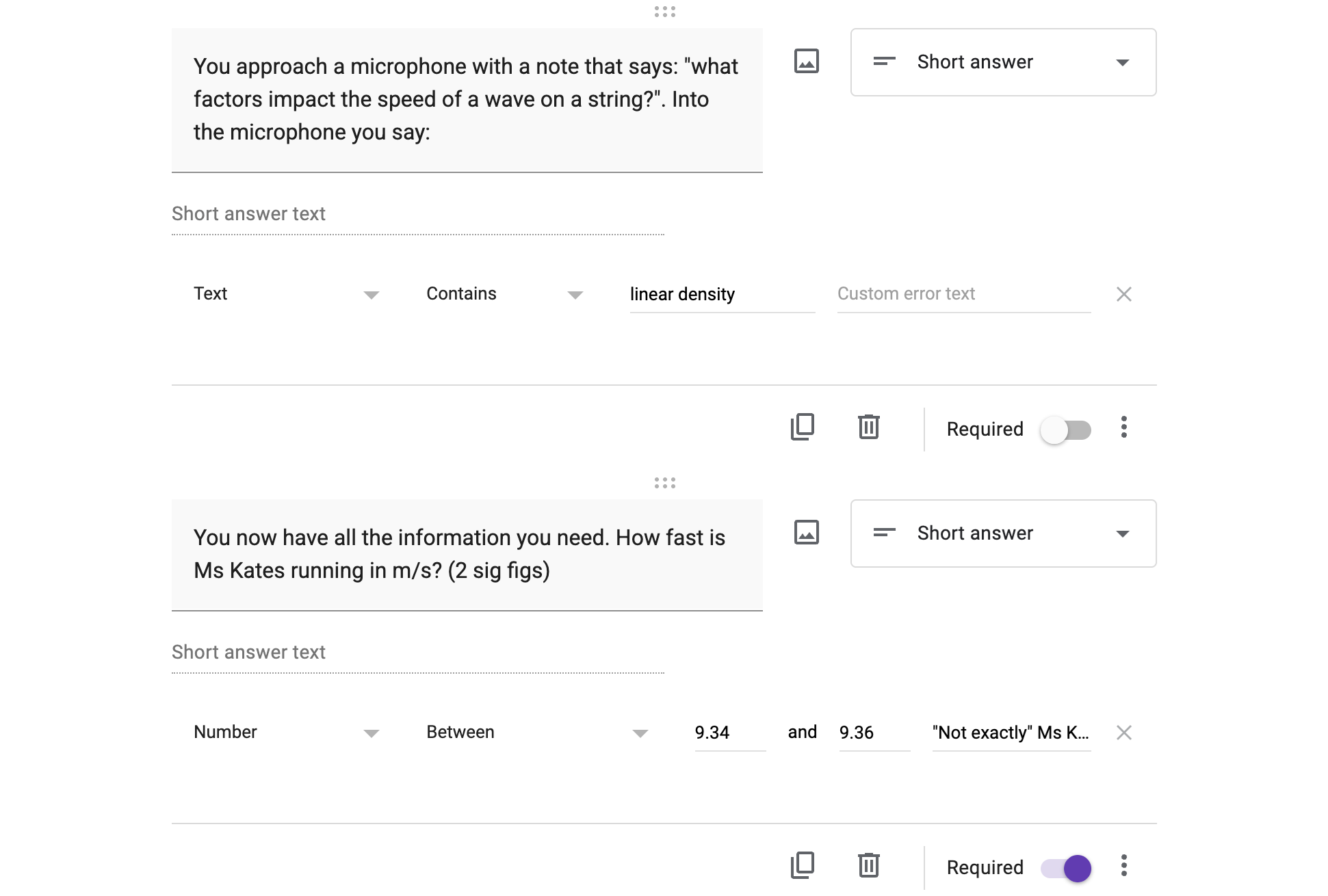 Figure 5: Response validation can be used to allow students to progress if their answer is within given limits.
Feedback: Part of the fun also comes from how you respond to incorrect responses. Forms allow you to create “Error messages” to add flavour to the students’ experiences! For our escape room, phrases such as "the lock flashes red" or "nothing happens, try again" heightened the student immersion.
Outside of the digital space, students solved problems (whiteboard and calculators) and interacted with various manipulatives to gather additional information (straws of various lengths; hidden picture of a thermometer). Incorporating the tactile elements into the students’ physical space not only made the physics concepts more concrete, but also heightened the immersive experience of the game.
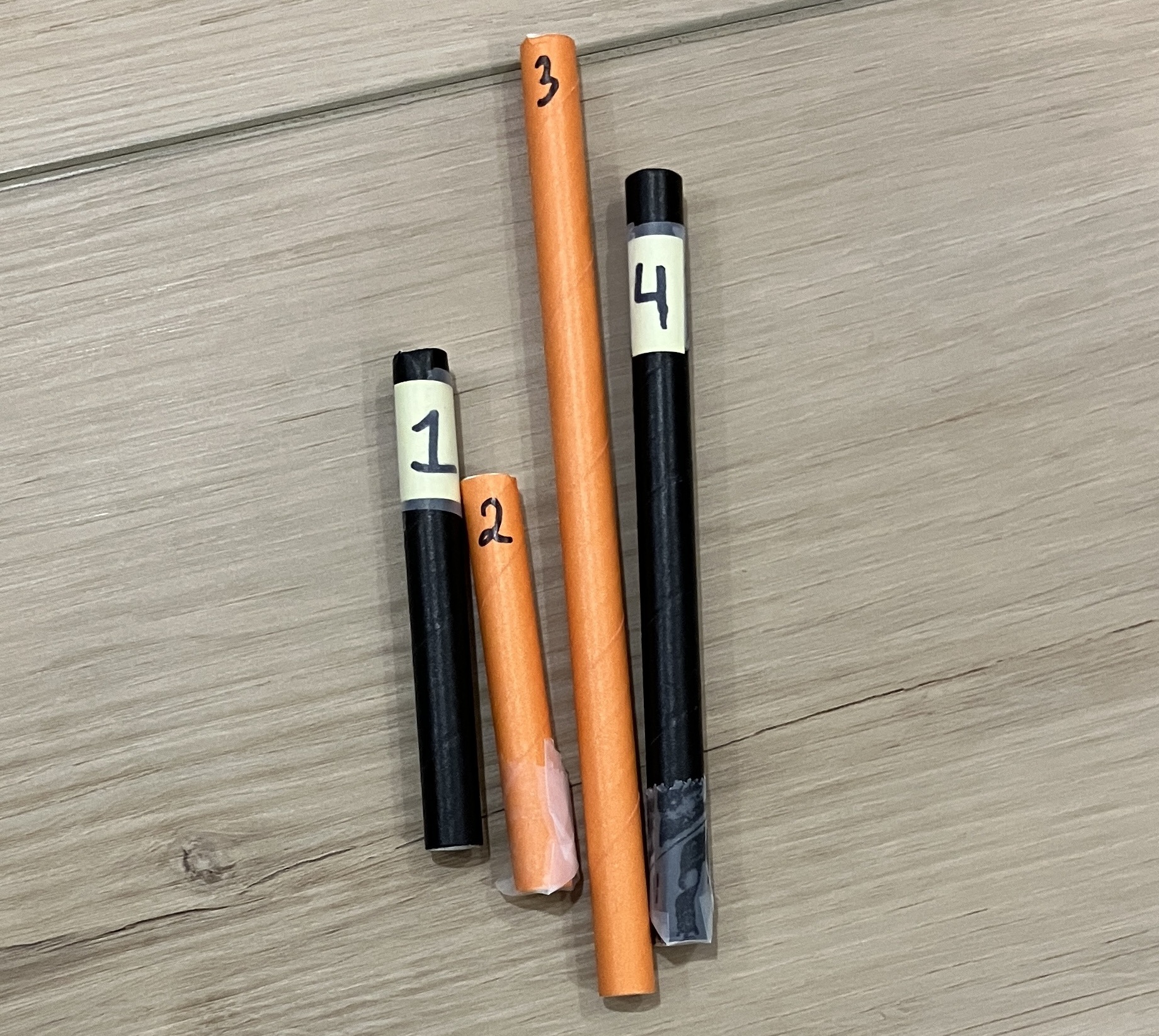 Figure 6: Straw manipulatives given to students to measure. Straws 1 and 3 were open on both ends, straws 2 and 4 had one end taped.
In an era where many discussions centre on how to engage students, GBL may be worth revisiting. Even when the puzzles were difficult, students persevered. They consulted peers, notes, or textbooks, to work collaboratively towards a solution; no phone use or AI assistance occurred during this activity, nor did students need to be asked to refocus.
Did the students learn? The debrief is a very important step. During this step there is an opportunity to identify and dispel any remaining misconceptions, and for students to learn from one another. This also creates an opening for the teacher to offer additional advice on next steps for the course.
If you want to give our escape room a try, follow the QR code to access the room or click
here (you will be prompted to make your own copy; please edit to fit your classroom’s needs).
 Figure 7: The QR code for the escape room.
Note, you will also need the following information and equipment to play the game with your class.
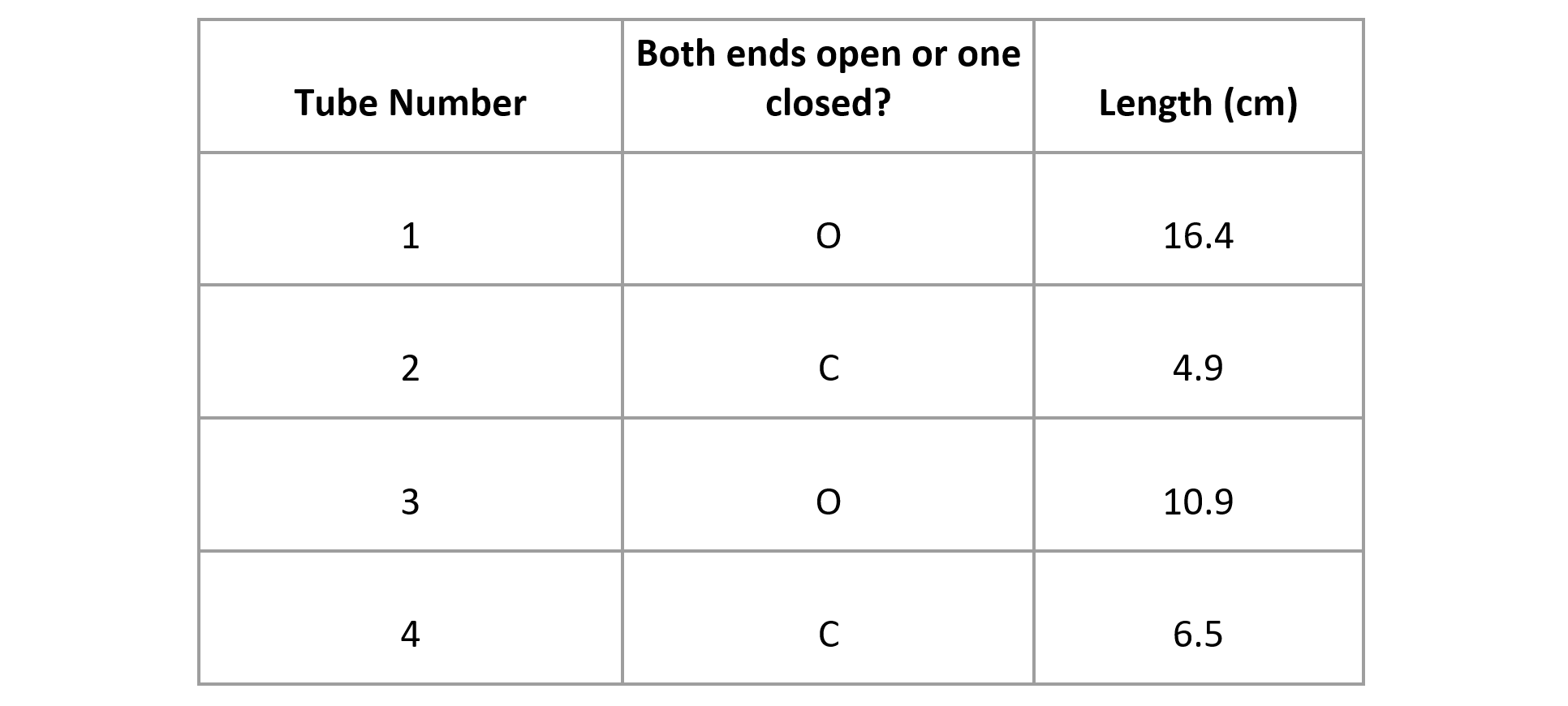 Figure 8: The specifications for the straw manipulatives in Figure 6.
Solutions are based on a temperature of 15.0 °C if not otherwise specified. Special thanks to Courtney Kates for sharing her escape room.
References
- Csikszentmihalyi, M. (1990). Flow: The psychology of optimal experience. Harper & Row.
- Fernando, P. A., & Premadasa, H. K. S. (2024). Use of gamification and game-based learning in educating Generation Alpha: A systematic literature review. Educational Technology & Society, 27(2), 114-132.
- Janiga, L., & Haverlíková, V. (2025). PhysLab Break – escape games for physics education. Journal of Physics: Conference Series, 2950(1), 012031.
- Oar, C. (2025, July 15). Beyond fun: How game-based learning creates durable outcomes. NPPGov.
- von Kotzebue, L., Zumbach, J., & Brandlmayr, A. (2022). Digital escape rooms as game-based learning environments: A study in sex education. Multimodal Technologies and Interaction, 6(2), 8.
Tags: Pedagogy, Technology, Waves and Sound